

Skip to content

CASE STUDY · ENGELBRECHT RENGØRING · DENMARK

Building an acquisition and sales-support system around an existing cleaning business.

Engelbrecht Rengøring is a nationwide Danish cleaning company serving public institutions, businesses and private customers. QashLabs did not design or build the company's website. The work was to research the market around it and operate the Google Ads, Meta Ads and lead-generation system that turn attention into handled enquiries for the sales side of the business.

Atmospheric illustration of professional commercial cleaners working in a bright modern institutional interior
Atmospheric context only — a stock-style image of commercial cleaning work, not a specific Engelbrecht Rengøring site or contract.
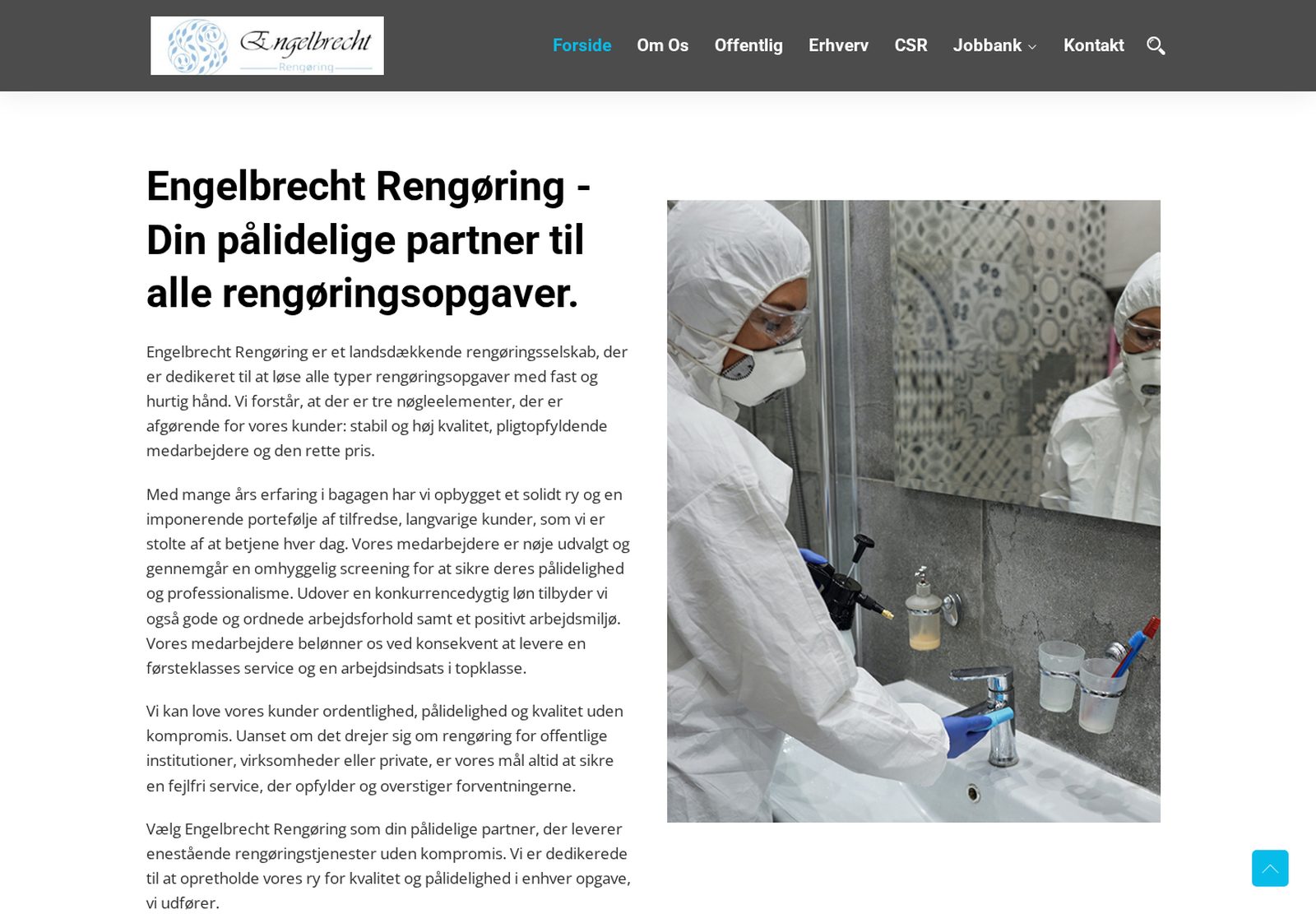
Engelbrecht Rengøring's existing website, showing its headline, a description of the company as a reliable nationwide cleaning partner and a photograph of a cleaner at work
Engelbrecht Rengøring's existing website — not designed or built by QashLabs. Shown as the starting environment the acquisition system was operated around.

01

Starting position

An established operator with three very different buyers.

Engelbrecht Rengøring was already an operating, nationwide cleaning business with a Glostrup head office, serving public institutions, businesses and private customers. A municipality procuring school cleaning, a company buying facility services and a private household do not search the same way, decide the same way or buy on the same cycle. The commercial position was real; the question was how to build structured acquisition around it.

02

Research and demand

Understanding the market before spending in it.

Before any campaign was structured, QashLabs examined search behaviour, service demand, buyer intent and commercial opportunities across the company's service areas. The research defined which needs were worth buying traffic for, which audiences existed and how the offers should be separated — no campaign was built on assumption.

03

Audience and offer structure

One company, three distinct acquisition logics.

The site itself signals the split: dedicated sections for public-sector customers and businesses, plus private cleaning. Public institutions such as schools buy through formal processes and references; businesses buy reliability and terms; private customers buy trust and convenience. Acquisition was structured around those differences rather than one generic campaign for everyone.

04

Google Ads

Search-led acquisition mapped to real demand.

QashLabs operates the company's Google Ads on an ongoing basis, as owner-reported scope. Campaigns are structured around the service needs and buyer groups identified in research, with search intent mapped to the appropriate destinations on the existing website. This describes the operating scope — it is not a claim about performance, and no campaign figures are published here.

05

Meta Ads

Supporting visibility and lead capture.

Alongside search, QashLabs operates the company's Meta advertising on an ongoing basis, again as owner-reported scope. Meta plays a supporting role — awareness, presence and lead capture where the audience fits — rather than pretending a social channel behaves like search. No channel outcome is claimed beyond that scope.

06

Lead generation and sales support

Enquiries handled as a process, not as scattered inboxes.

QashLabs implemented a lead-generation and sales-support system behind the campaigns, so enquiries are routed into an organised process where sales can respond, qualify and follow up. This layer is internal: it is reported by the business owner as part of the delivered scope, and its platforms and configuration are not shown publicly here.

07

Public-sector credibility

Verified context, stated precisely.

The company's website highlights a published reference from Niels Brock, a Danish educational institution, with a positive attributed statement from its facility-management context, and states that Engelbrecht specialises in tailored cleaning for upper-secondary schools, youth education and other public institutions. That is public context about the client — not a QashLabs testimonial, and not an account QashLabs claims to have won. Separately, the owner reports that Engelbrecht has won many government and public-sector contracts, including schools; that claim is owner-reported and is not independently verified here.

08

Working with what already existed

An operating layer around the site, not a redesign.

The website belongs to the client's existing setup and was kept as it was. QashLabs' role was the system around it: research, paid acquisition and lead handling. Being precise about what was not in scope is part of being precise about what was.

The operating system around the website

Acquisition and handling, connected.

  1. 01Demand research

    Search behaviour, service demand and buyer intent examined before acquisition.

  2. 02Audience structure

    Public institutions, commercial facilities and private buyers treated separately.

  3. 03Google Ads

    Search-led acquisition mapped to high-intent cleaning needs.

  4. 04Meta Ads

    Supporting visibility and lead capture where suitable.

  5. 05Lead capture

    Enquiries enter an organised process rather than scattered inboxes.

  6. 06Sales follow-up

    Qualification, response and follow-up handled as a defined workflow.

  7. 07Learning loop

    What is observed feeds back into targeting, messages and handling.

Scope note

What this case documents.

This case study documents acquisition and lead-system implementation around an existing website — not website design or development, which were not part of QashLabs' scope. Campaign operation and the internal lead process are owner-reported scope and are not demonstrated publicly here.

It is not a performance case study. No leads, spend, conversion, sales, revenue or contract figures are published, and no public-sector contract win is attributed to QashLabs. Nothing in it should be read as a guaranteed outcome for another business.

Next step

Find the break in your own customer journey.

A free 30-minute online meeting on Google Meet helps us understand what you already have, where the immediate problem may sit and what the sensible next step is.