Skip to content

CASE STUDY · HOUSE OF INSPIRATION · DENMARK

From two flower shops to one connected retail and delivery operation.

House of Inspiration runs two physical flower shops in the Copenhagen area. Selling flowers well means the shop, the online discovery, the product ordering, the customer follow-up and the actual delivery all have to behave as one operation. QashLabs built the main website, the connected e-commerce shop, the content structure behind both, and the follow-up and delivery systems around them.

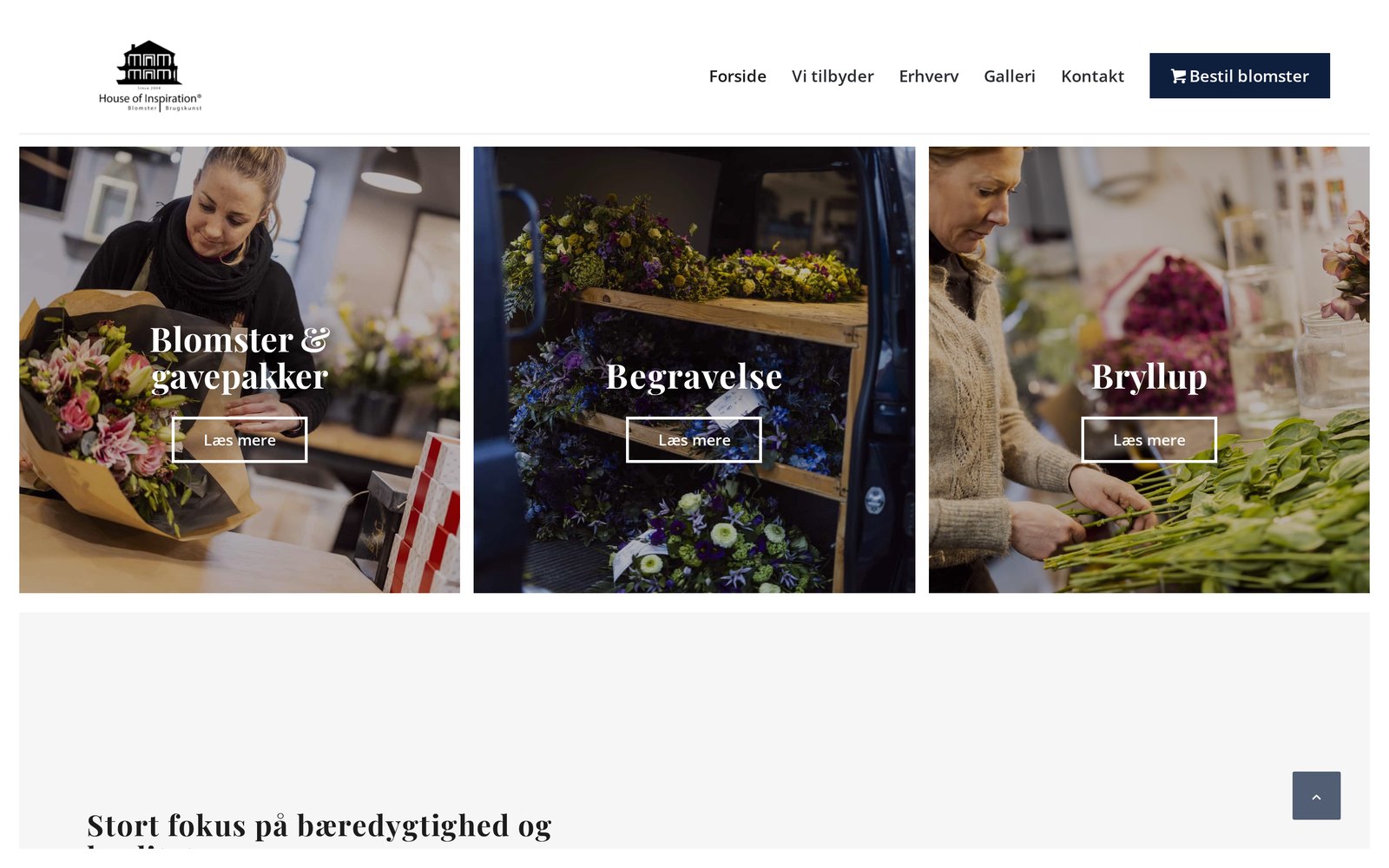
House of Inspiration website showing the brand navigation and three occasion sections for flowers and gift packages, funeral flowers and wedding flowers, each with a read-more link
House of Inspiration website — occasions, galleries and store information in one editorial structure.

01

Starting point

Two shops, many occasions, one fragmented path.

A flower business serves very different moments: a spontaneous gift, a wedding booked months ahead, a funeral arranged under pressure, a standing corporate agreement. Each has its own urgency and its own way of buying. Across two shop locations, discovery, purchase, contact and delivery needed to stop behaving as separate things.

02

Brand and service website

An editorial main site that carries the business, not just a catalogue.

The main site presents the craft side of the business: handmade bouquets and gift packages, funeral flowers, wedding flowers, corporate arrangements, gallery work, store information, contact and delivery conditions. It is where a customer understands who they are buying from before deciding what to buy.

03

Connected e-commerce

The shop customers are handed to, not sent away to.

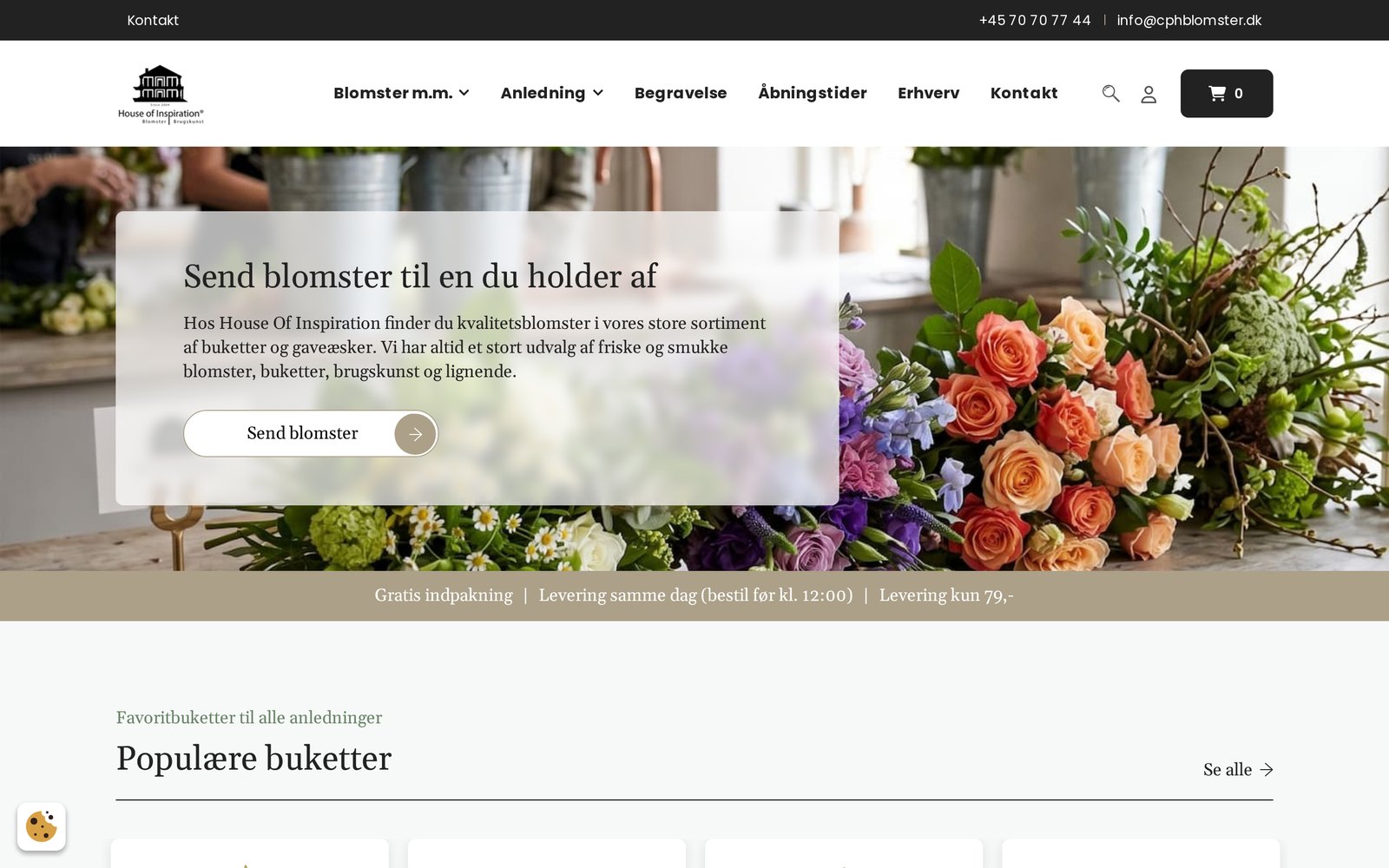
Ordering happens in the connected CPHBlomster store. The main site routes buying intent straight into it, so the journey from inspiration to a placed order stays continuous rather than restarting on an unrelated site.

CPHBlomster online shop showing the product navigation for flowers, occasions and funerals, a send-flowers call to action, and a bar stating free wrapping, same-day delivery when ordered before noon and a fixed delivery fee
CPHBlomster — the connected store where the catalogue, basket and ordering live.

04

CMS and content operation

Two sites that can be kept current without development work.

Both sides are built on reusable content structures: products, occasions, local pages, store details, delivery information and ongoing updates follow existing patterns. Seasonal ranges and changing conditions can be published by the business itself.

05

Conversion paths

Different intent, different route — all of them defined.

Someone ready to buy should reach the basket in the fewest possible steps. Someone arranging a wedding or a funeral usually wants a person. A business wants an agreement. A local customer may simply want the address. Each of those is a designed route rather than an afterthought.

06

CRM and follow-up

A workflow layer behind the enquiries.

QashLabs implemented a CRM and follow-up workflow layer so enquiries and customer conversations are handled in a structured way rather than in scattered inboxes. This layer is internal: it is reported by the business owner as part of the delivered scope, and its configuration is not shown publicly here.

07

Delivery operation

The part of the promise that happens after checkout.

A flower order is only finished when it arrives. QashLabs implemented the delivery-system layer supporting fulfilment behind the ordering conditions published on the shop. What is publicly visible is the delivery promise and its conditions; the operational layer behind it is owner-reported scope and is not detailed here.

08

Local discovery and two shops

Two real addresses, and the areas around them.

Physical retail has to be findable locally. Both shops are presented with their full addresses, supported by local discovery pages for the surrounding areas so a nearby customer can find the business in their own terms.

  • Holmegården

    Kløverprisvej 3, 2650 Hvidovre

  • Blomster hos Poul

    Nærum Hovedgade 81, 2850 Nærum

Local discovery pages

Hvidovre · Rødovre · Nærum · Vedbæk · Virum — an architecture for local coverage, not a ranking claim.

09

Ownership

The business owns the platform it runs on.

The website, the shop, the content structures and the surrounding systems belong to the business. Products, occasions, store details and conditions are maintained in-house, so the operation can keep moving without depending on an agency for routine change.

The system now in place

One connected retail operation, end to end.

  1. 01Two physical shops

    Holmegården in Hvidovre and Blomster hos Poul in Nærum.

  2. 02Brand and service site

    The editorial home for occasions, galleries and store information.

  3. 03E-commerce store

    CPHBlomster for catalogue, basket and online ordering.

  4. 04CMS and content

    Products, occasions, local pages and delivery information kept current.

  5. 05Conversion routes

    Order, contact, call, corporate enquiry and visit-the-shop.

  6. 06CRM and follow-up

    Owner-reported workflow layer behind enquiries and customers.

  7. 07Delivery operation

    Owner-reported fulfilment layer behind the published delivery terms.

  8. 08Local discovery

    Local pages around the two shop locations.

Scope note

What this case documents.

This case study documents what QashLabs built and connected: the brand and service website, the connected e-commerce store, the content structures behind both, the conversion routes, and the CRM, follow-up and delivery layers reported by the business owner as part of the delivered scope.

It is not a record of commercial performance. No order, revenue, traffic, ranking or conversion claim is made here, and nothing in it should be read as a guaranteed outcome for another business.

Next step

Find the break in your own customer journey.

A free 30-minute online meeting on Google Meet helps us understand what you already have, where the immediate problem may sit and what the sensible next step is.